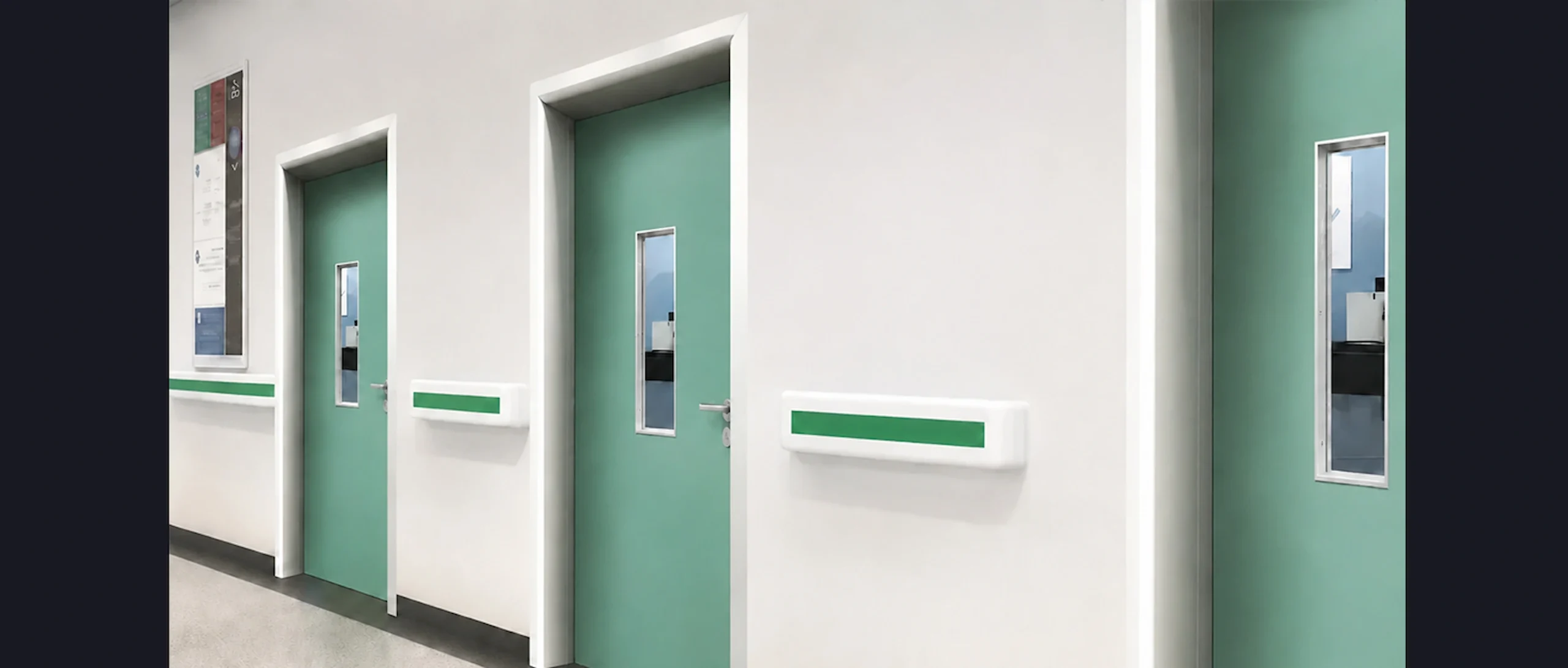
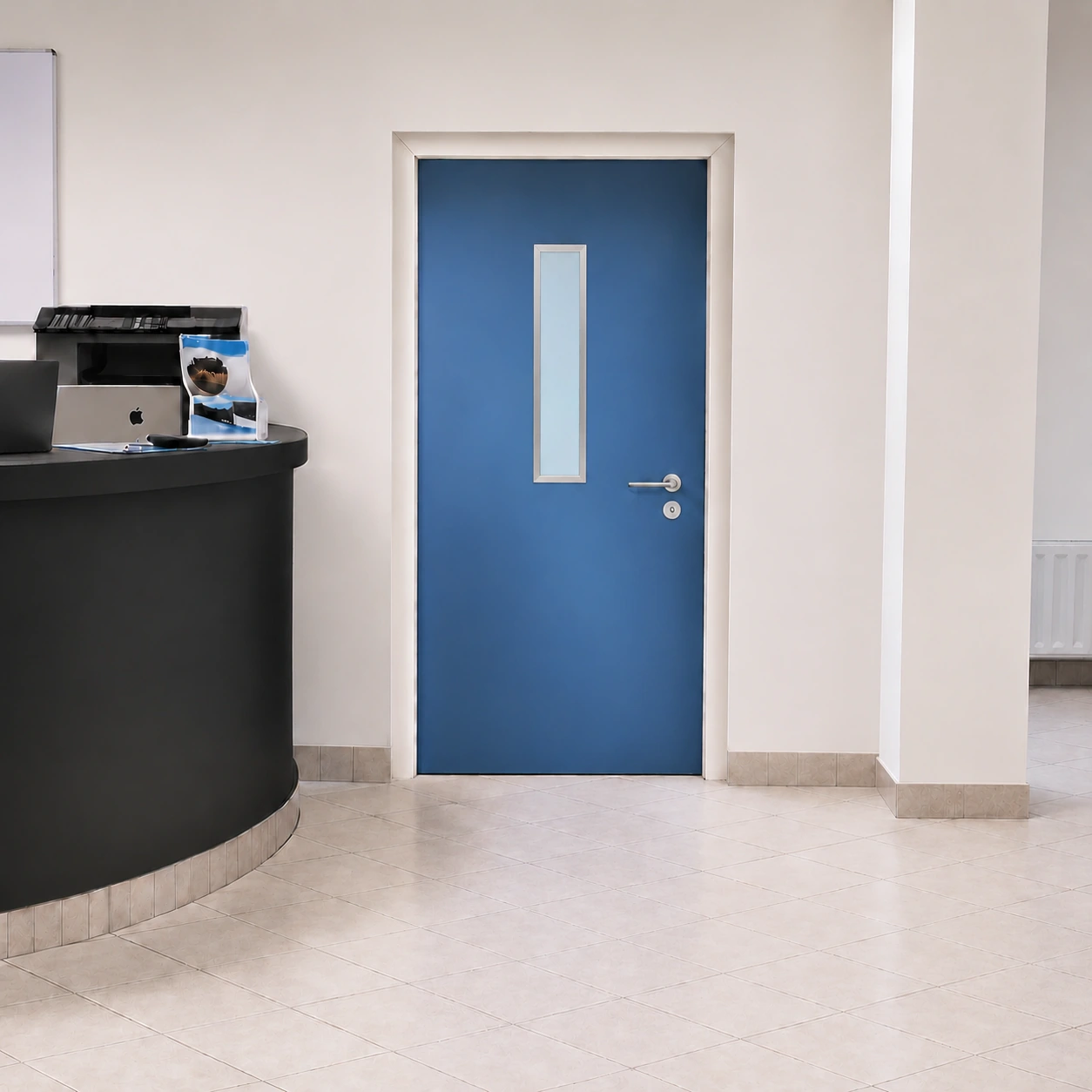
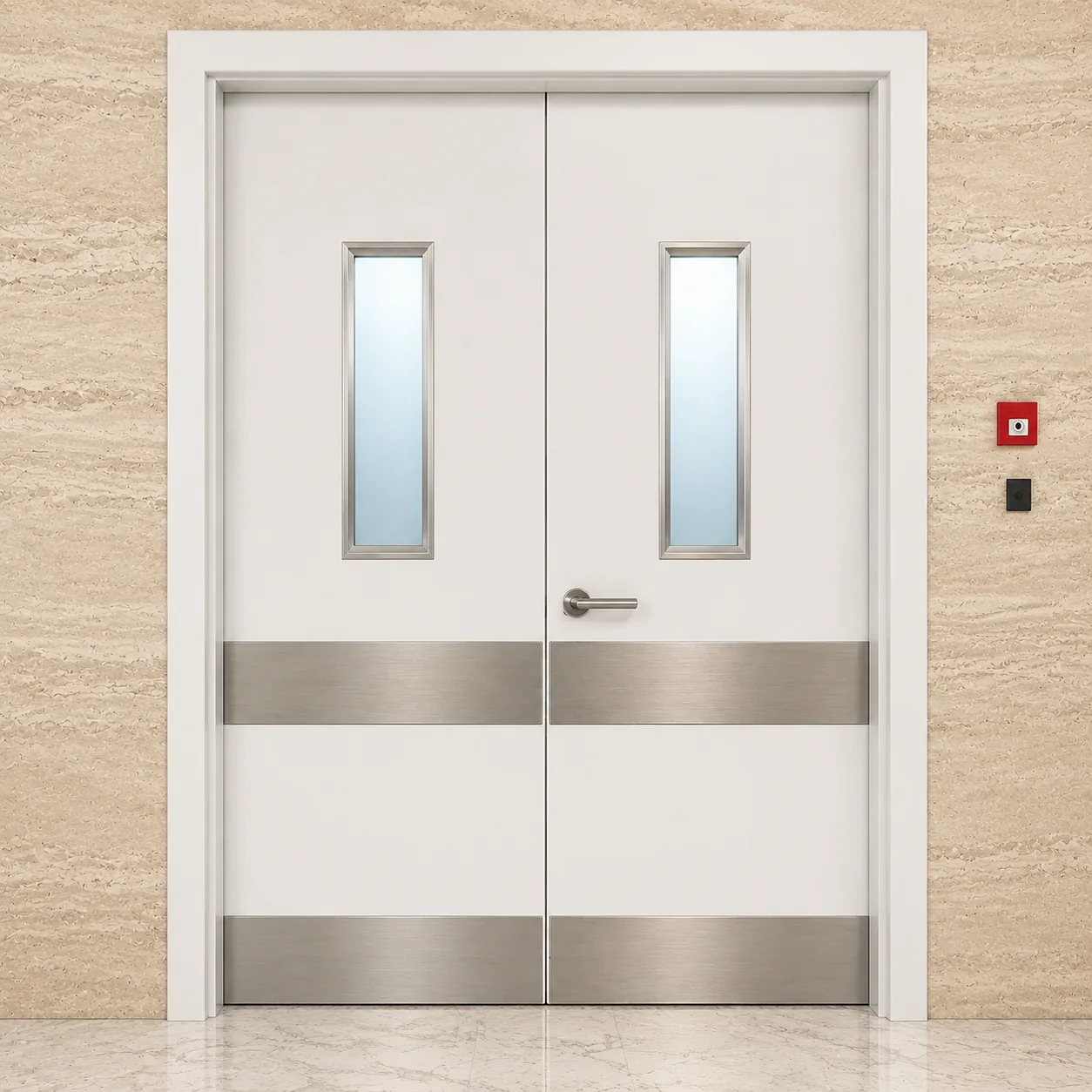
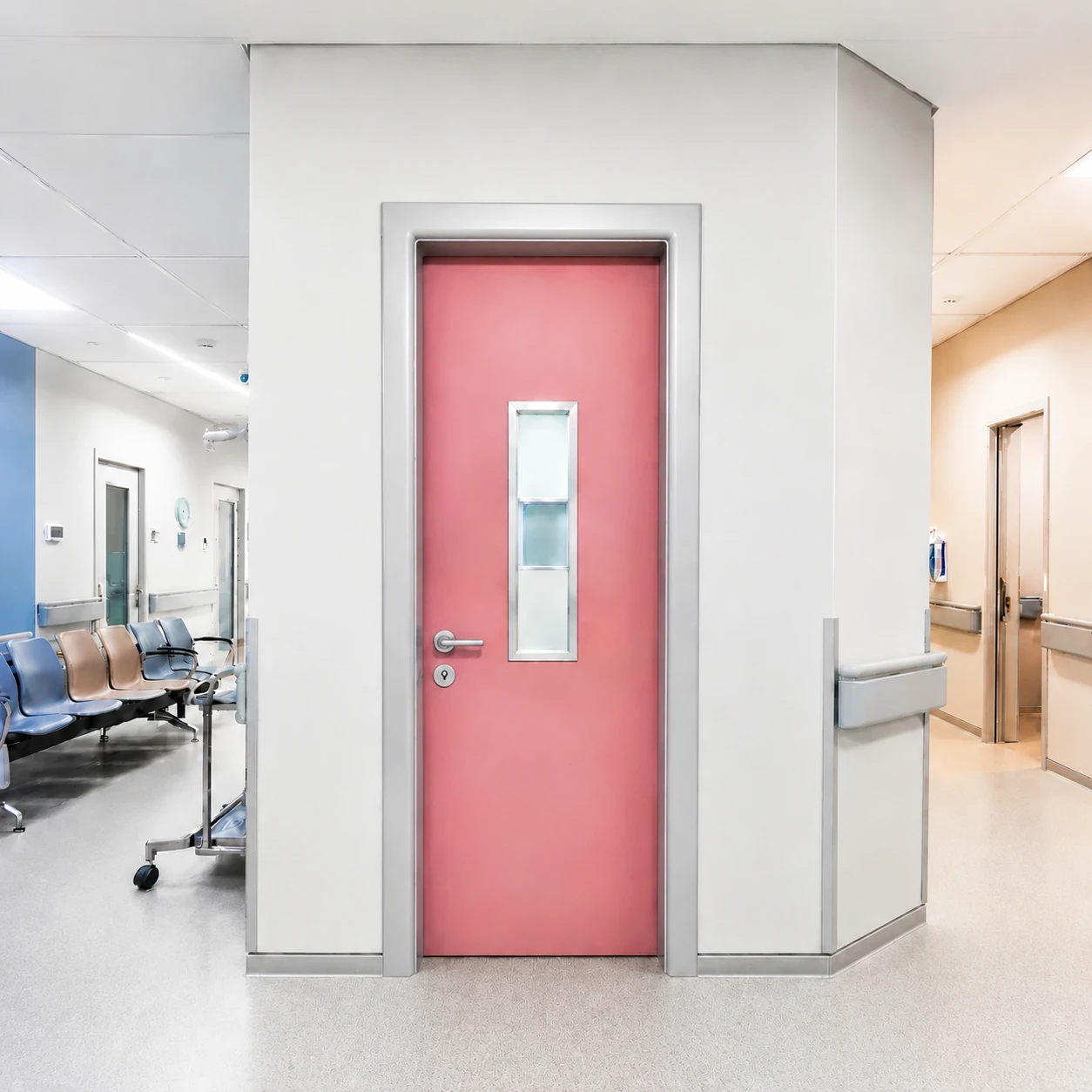
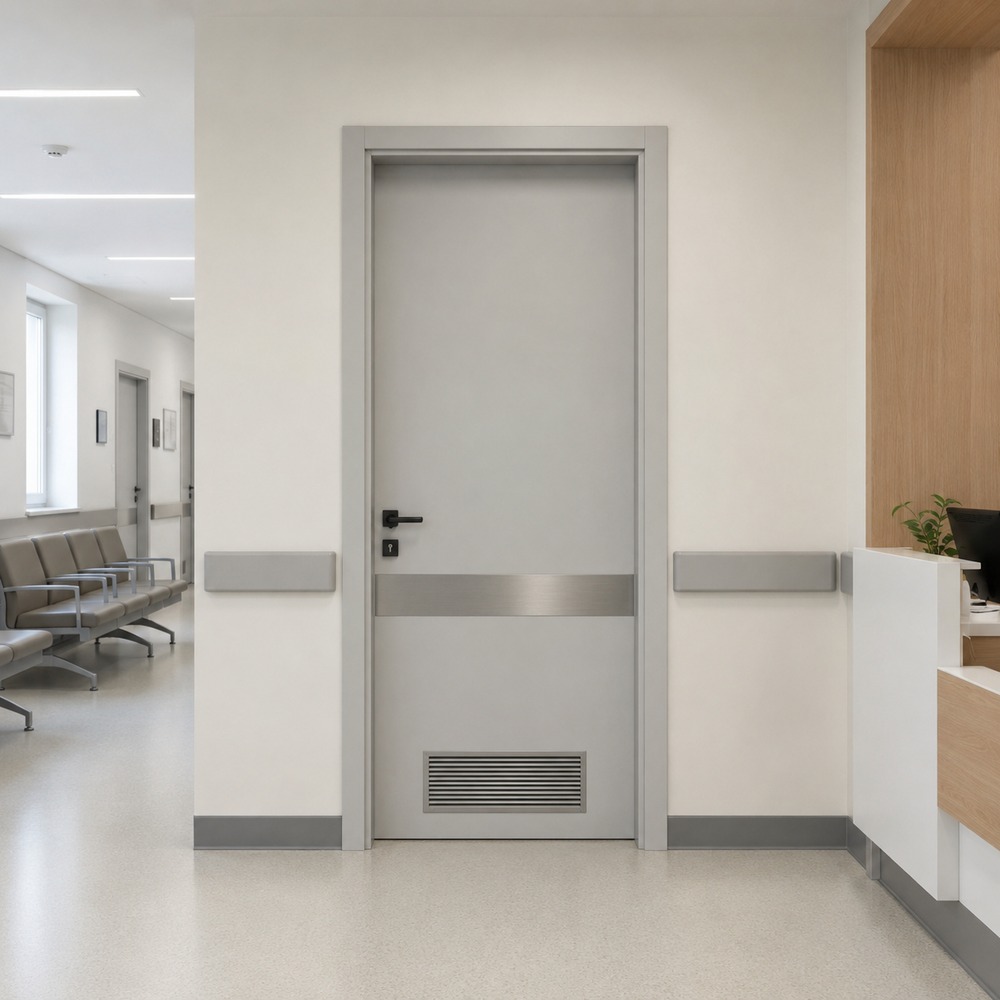
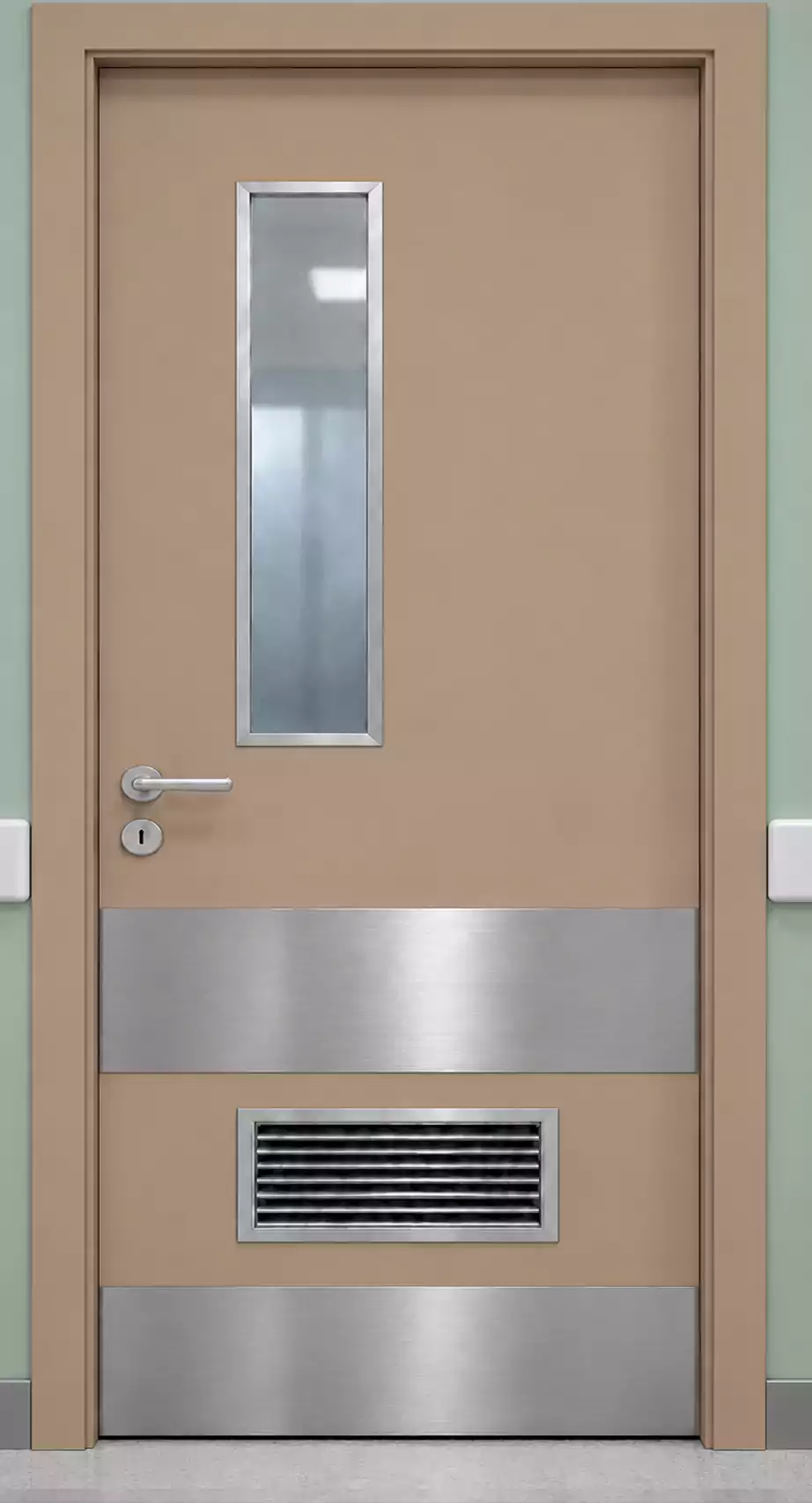
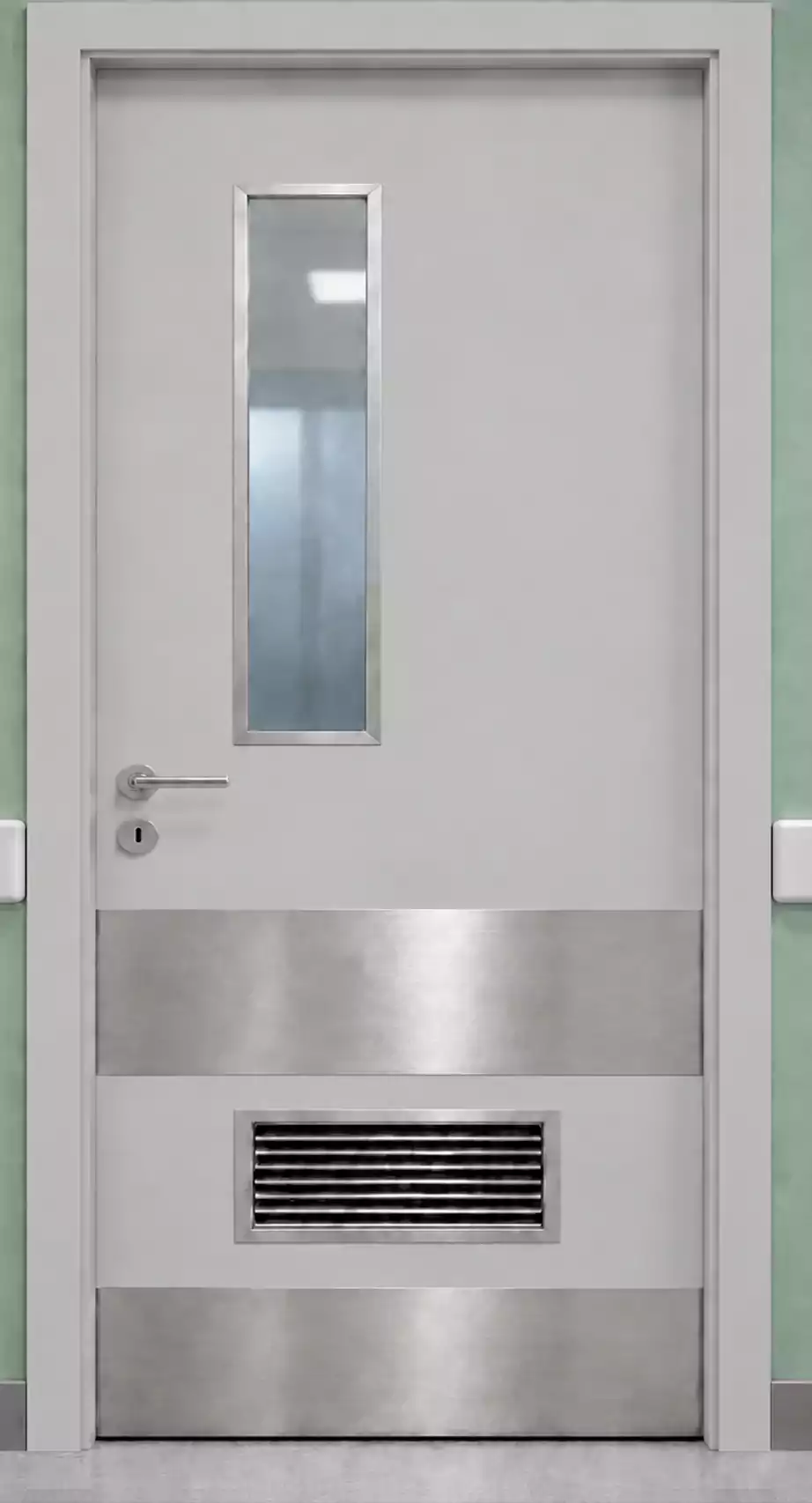
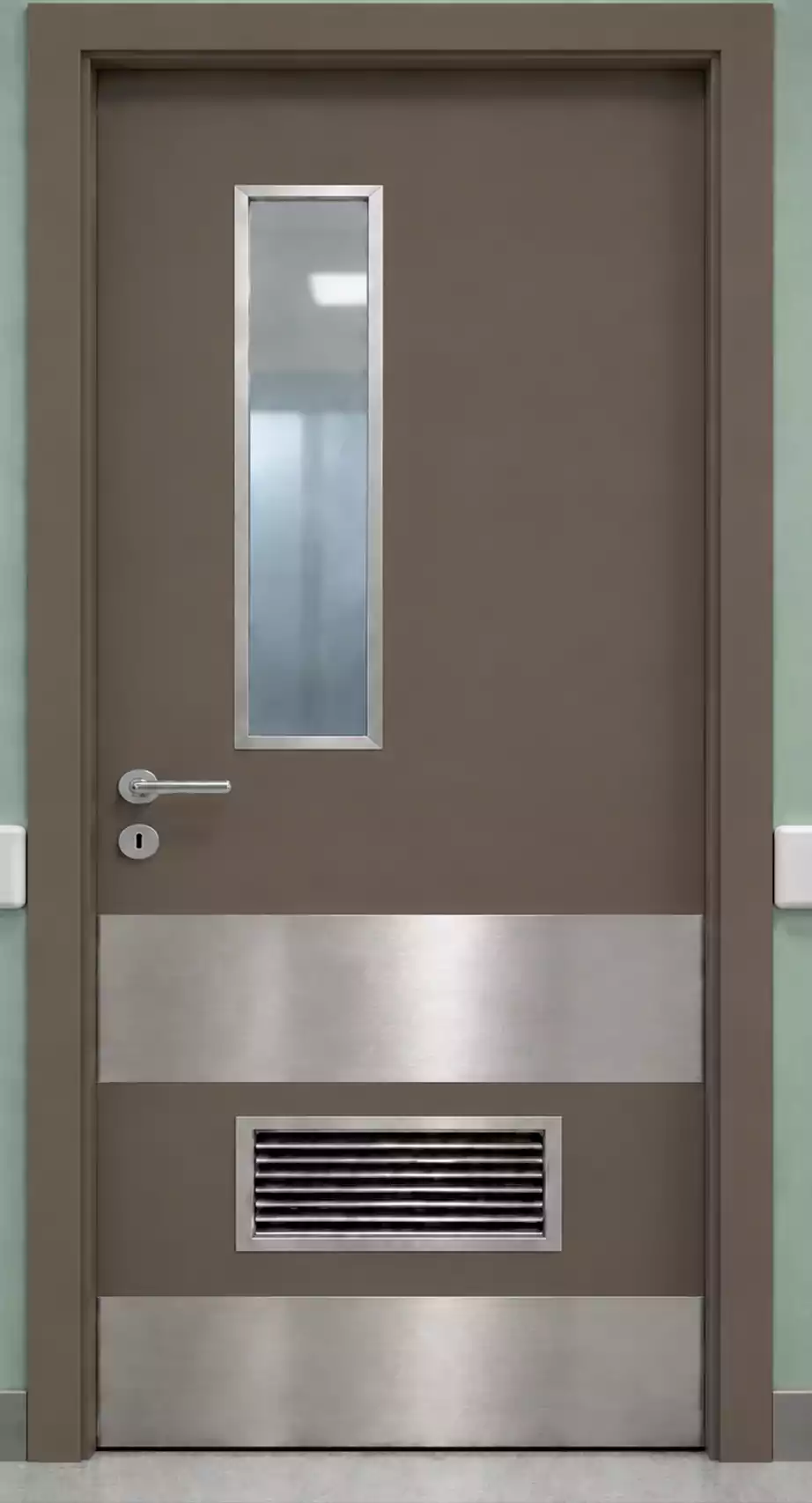
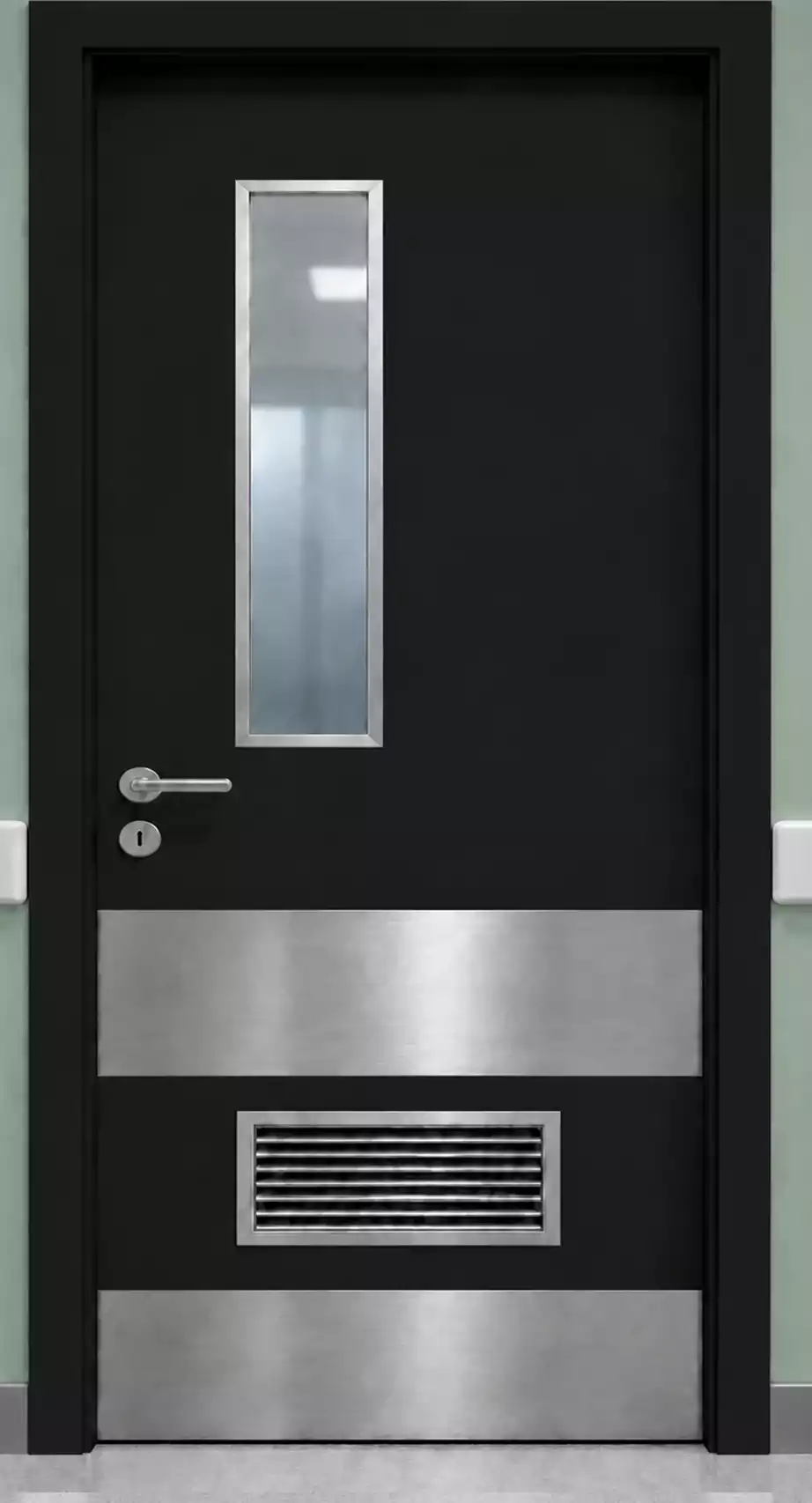
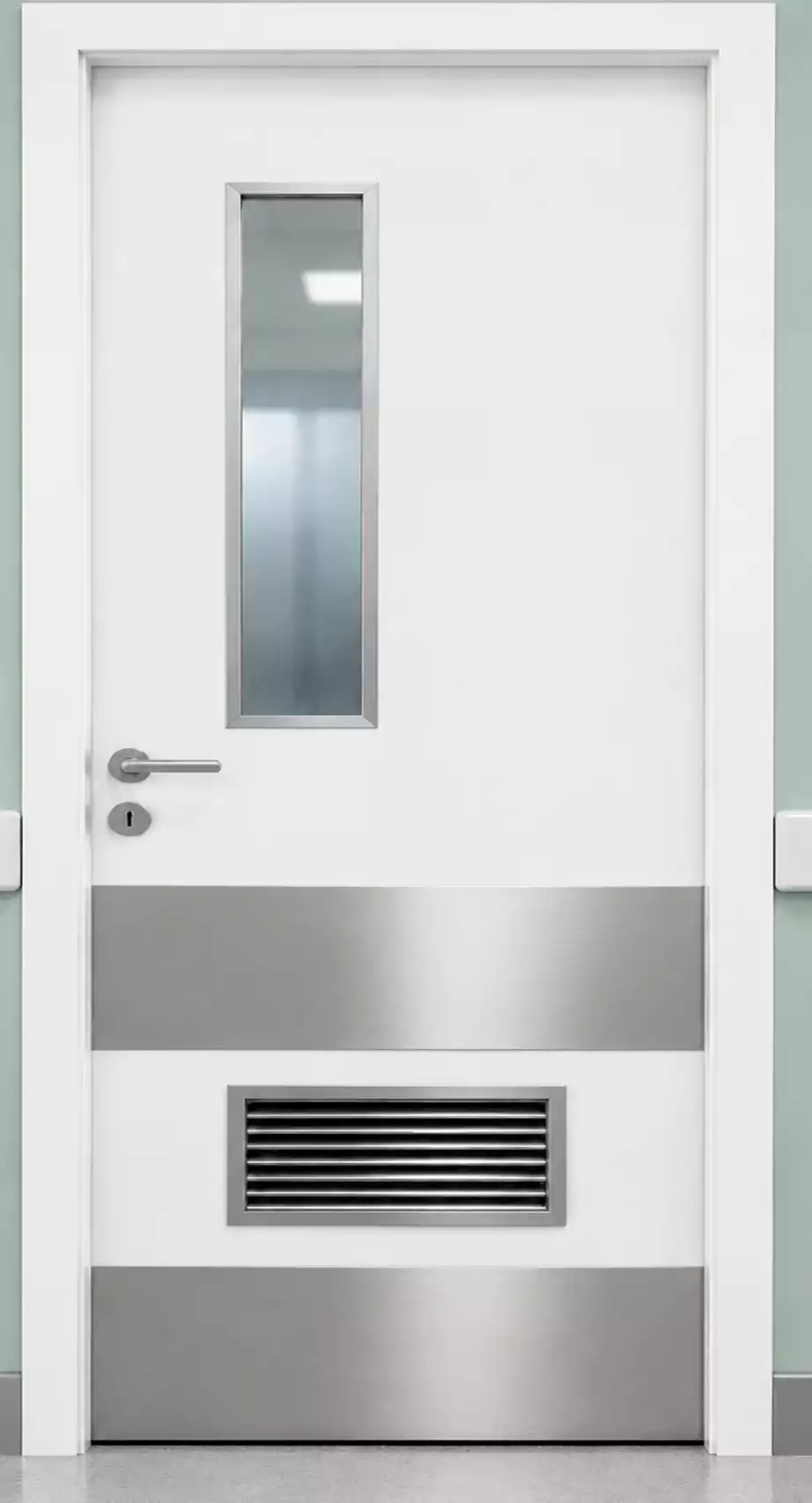
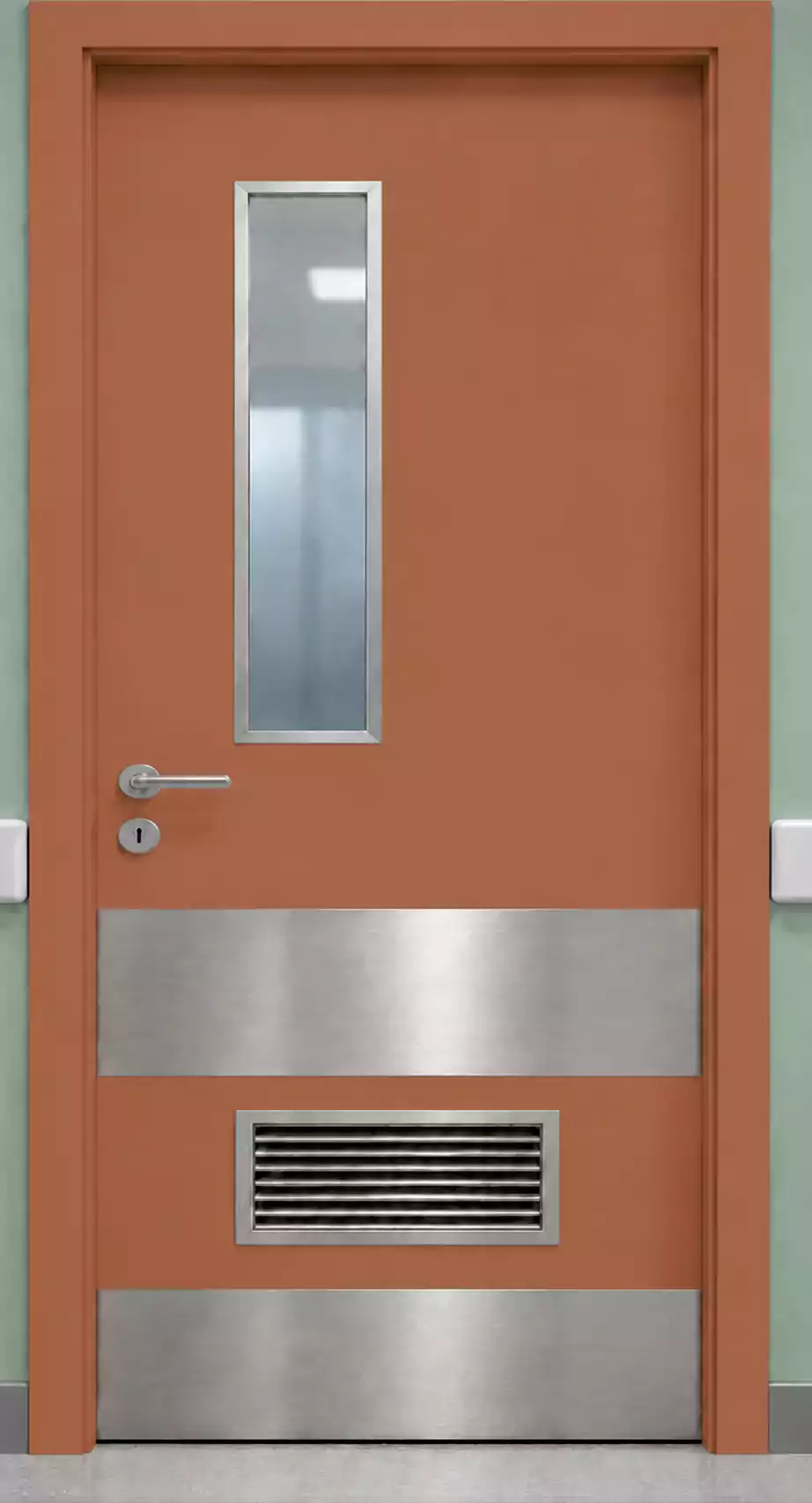
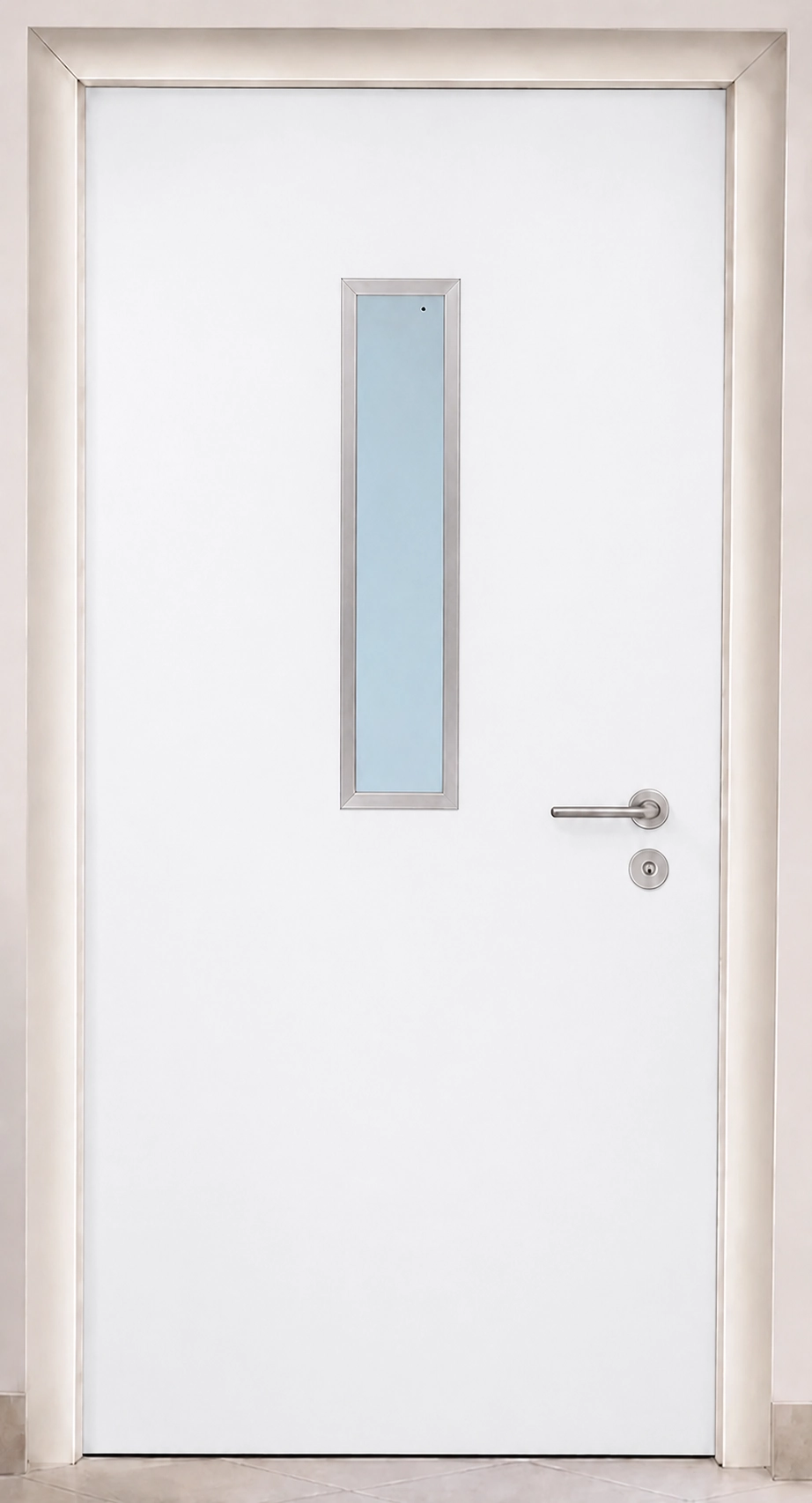
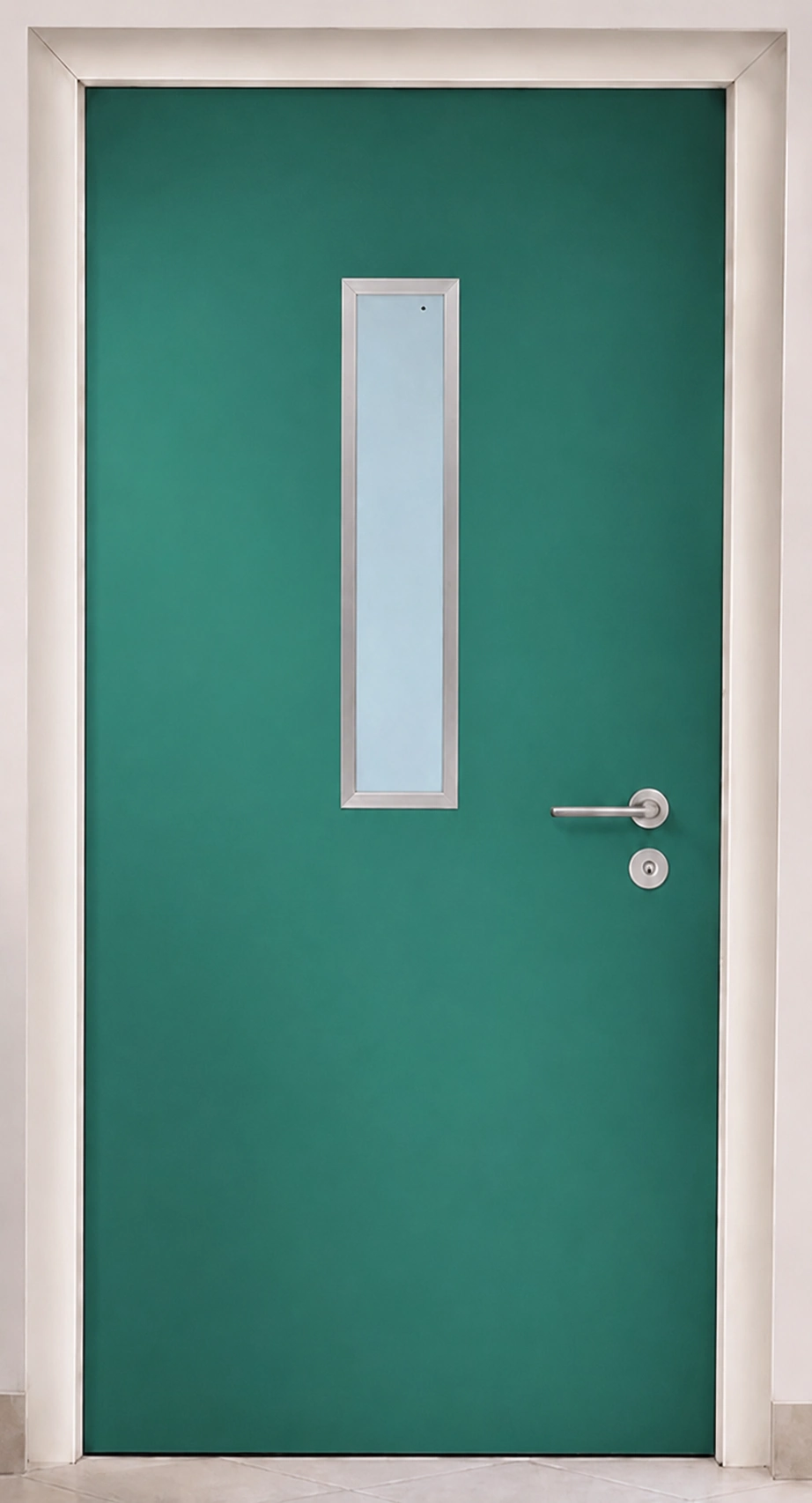
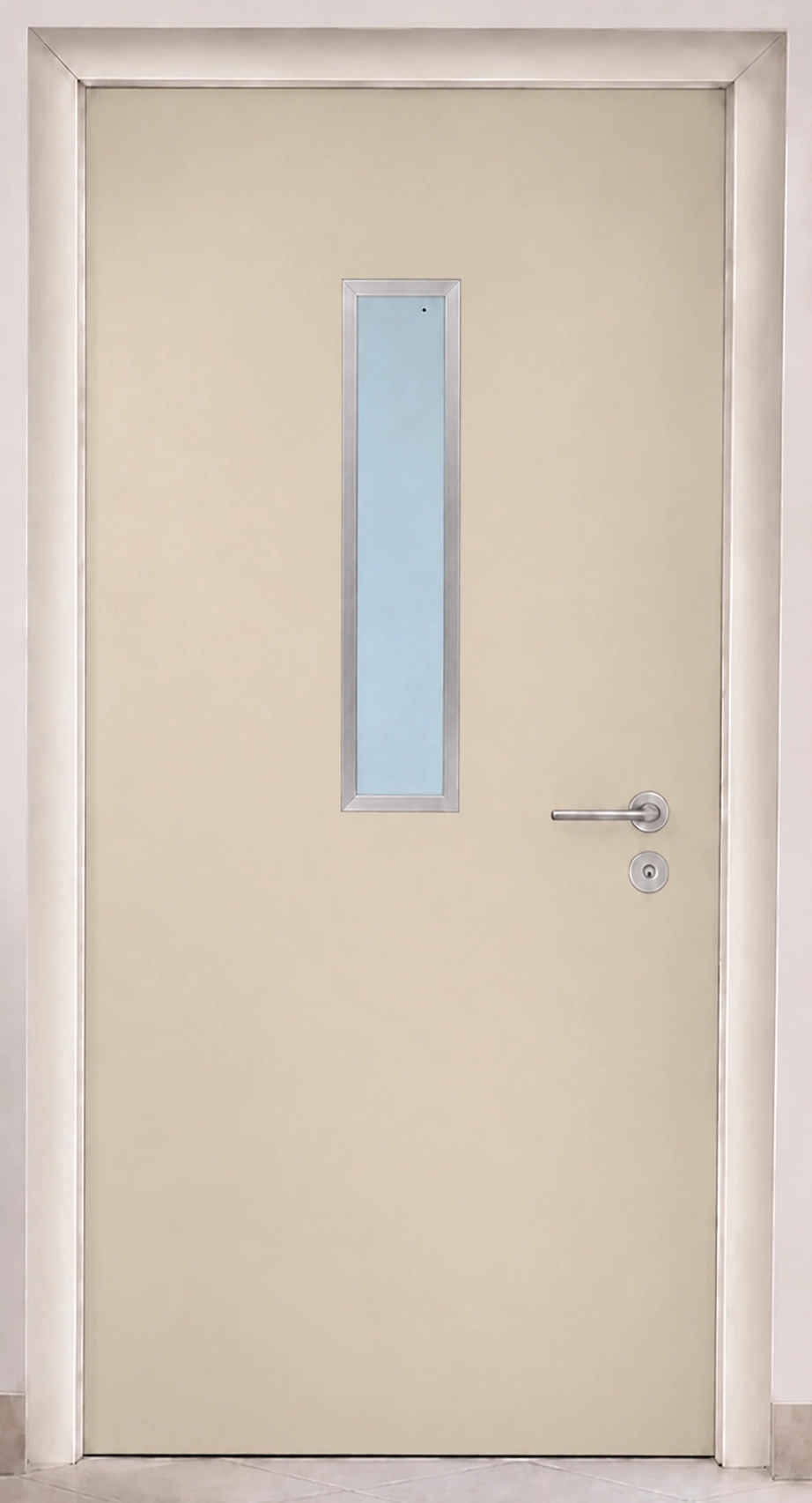
The Cedar hospital door is specially designed for medical spaces and centers and has a very high resistance to heavy traffic, impact, moisture and continuous washing. These doors are made in accordance with hospital health and safety standards and are suitable for various departments including patient rooms, emergency rooms, operating rooms, clinics and high-traffic corridors.
Main features of the hospital door
1. Excellent impact resistance
Due to the passage of stretchers, hospital beds, wheelchairs and trolleys, the door leaf is constantly exposed to impact.
For this reason, the Cedar hospital door is reinforced with the following:
Middle and lower steel sheets for one or both sides of the door leaf
Moisture-resistant and durable plywood structure
Sturdy assembly to prevent deformation
2. Complete washing and disinfection capability
3. Hospital door leaf model variety
This product can be ordered in the following models:
Steel door
Door with ventilation hatch
Door with steel and ventilation hatch
Door with glass and steel frame
Door with glass frame and ventilation hatch
Combined model of steel + glass frame + ventilation hatch
All models can also be produced in the following modes:
Single leaf
Double leaf
Pivot double leaf
4. Customization capabilities
75×75 mm aluminum frame
Increases the frame’s resistance to everyday hospital impacts.
Aluminum edge strip
The edges of the door leaf on the lock or hinge side are reinforced with a 2.5 mm aluminum strip.
Glass frame
Enables better visibility for personnel + more beauty
Can be ordered in different sizes.
Stable and reliable assembly of glass in a glass frame
Ventilation flap
For air exchange and ambient temperature control
Suitable for rooms requiring continuous ventilation.
Electric Strike
Connectable to access control and central security systems.
Lead Cover
For passing cables and wires inside the door leaf and frame, especially for rooms with electrical equipment.
Door Closer
Surface, built-in and electric
To control the speed of door closing and increase its lifespan.
Drop Down Sealing Mechanism
When closing, the air intake under the door is completely closed and the opening becomes airtight and smoke-proof.